
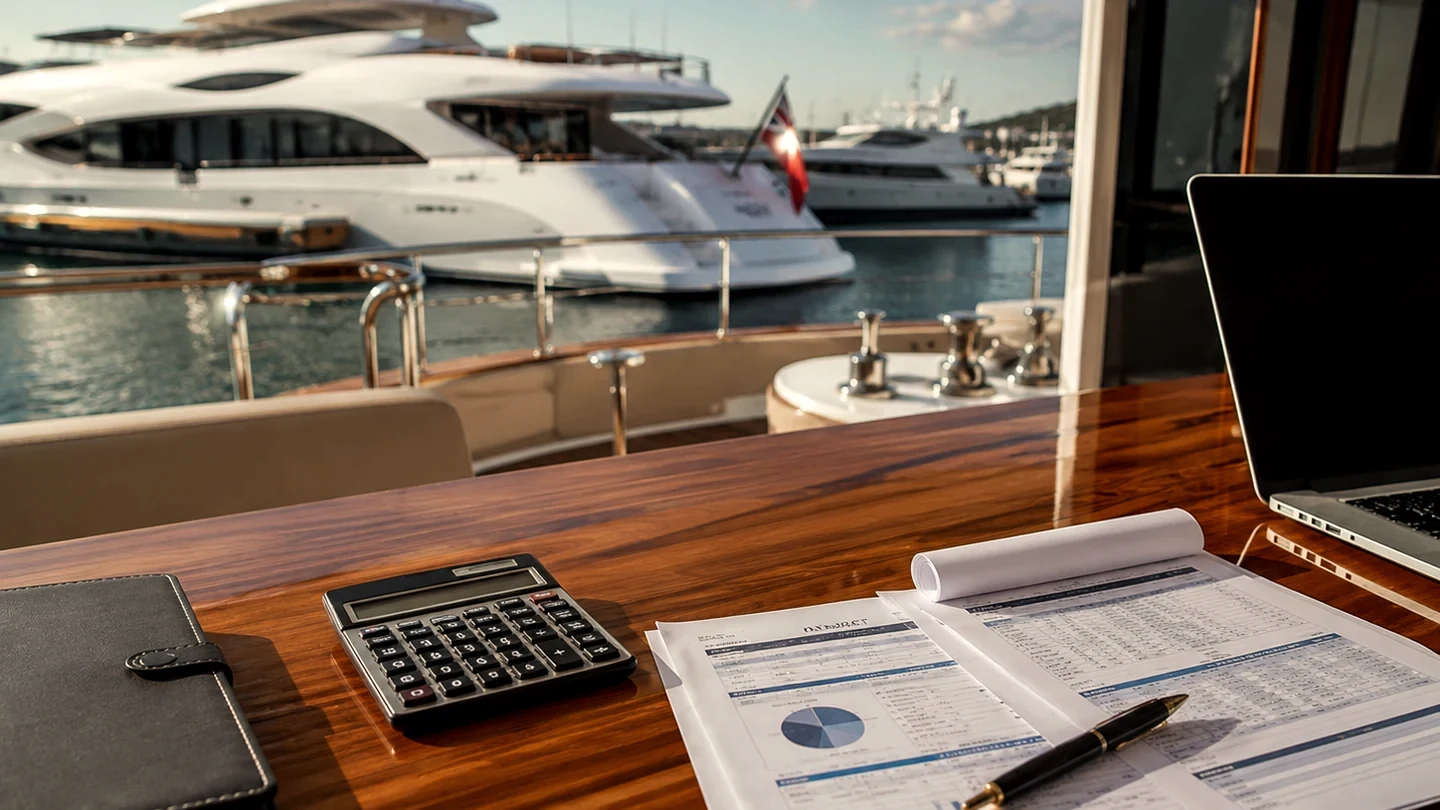
A useful budget is more than an estimate. It connects the intended cruising programme, maintenance, deadlines, suppliers and financial availability so that decisions can be made before expenditure becomes urgent.
What should an annual boat budget include?
A complete budget should cover berthing and marina fees, insurance, routine maintenance, major repairs, engines and propulsion, hull work, fuel, safety equipment, electronics, documents, suppliers, shipyard work, refit and contingency.
For meaningful control, separate budgeted cost, actual cost, amount paid, outstanding payments and authorised work not yet invoiced. This gives a more realistic view of remaining budget.
Define the period and operating plan
Clarify the period covered and how you expect to use the boat. Trips, destinations, engine hours, time afloat or ashore and known works all influence the main cost categories.
Use stable categories
Keep categories consistent over time: berthing and storage, insurance and documents, routine maintenance, major or unplanned work, fuel, suppliers, equipment and other costs. Consistency is more important than creating a very long list.
Separate fixed and variable costs
Fixed costs tend to remain even when use is limited. Variable costs depend more directly on operation. Separating them clarifies which expenditure is flexible and which requires firm financial planning.
Include known maintenance
Servicing, inspections, renewals, antifouling and scheduled works should have a date, estimated amount and quotation where available. Use a prudent estimate when the amount is not yet confirmed and update it as information improves.
Create a reserve
Unexpected work can arise. A reserve is not a confirmed expense; it is a protective allocation. Keep it separate from scheduled work so that the operating budget remains clear.
Distribute costs by month
An annual total does not show when cash requirements will peak. Monthly allocation identifies demanding periods and supports better management of deadlines.
Compare budget and actuals
Update actual expenditure regularly and explain meaningful variances. The reason may be an incomplete quotation, additional work, incorrect classification or a changed operating programme. Recording the cause improves the next budget.
Review the year
Identify major categories, unplanned work, recurring suppliers and deferred maintenance. The year-end review should improve the following plan, not simply describe the past.
Frequently asked questions about annual boat budgets
How much should I budget each year for a boat?
There is no single percentage that works for every boat. Size, marina, propulsion, technical condition, usage and service level all change the annual cost profile.
How should unexpected repairs be budgeted?
Create a dedicated contingency reserve for extraordinary maintenance and update it as new technical priorities are identified.
How often should the budget be reviewed?
Monthly review is usually more useful than year-end review because it highlights variances and committed costs before they become cash-flow surprises.