
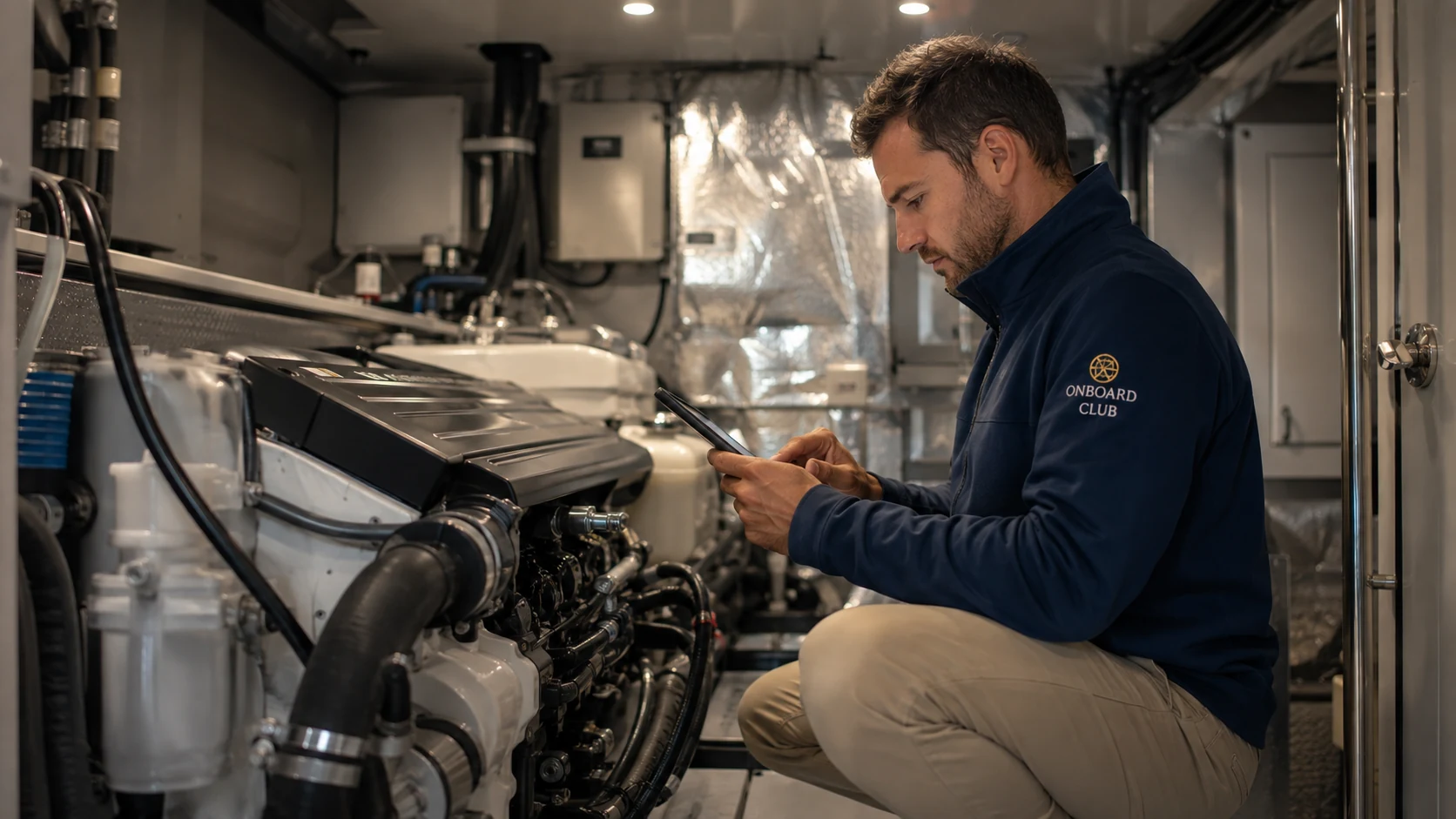
A technical survey is a professional assessment, but the buyer’s preparation can make the process more orderly and the questions more precise. Gather information, check document availability and agree the scope before the survey day.
What should you check before a pre-purchase boat survey?
Before the survey, collect ownership documents, certificates, maintenance invoices, engine hours, previous repair history, inventory and information about known incidents. During your own pre-inspection, look at the hull and deck, bilge, through-hulls, engines, electrical system, batteries, pumps, electronics and safety equipment.
A comprehensive survey may also include a haul-out to inspect the underwater body and a sea trial. The surveyor should remain independent from the seller and broker.
Clarify the intended use
Cruising area, number of people, comfort expectations and willingness to undertake work affect how the boat’s condition is interpreted.
Request available documents
Ask for the relevant documentation, maintenance history, significant invoices and information on previous work. Missing records do not automatically prove a defect, but they create questions that should be addressed.
Prepare questions for the seller
Organise questions around use, damage, repairs, engines, systems, storage, periods of inactivity and reason for sale. Record which answers require documentary or technical verification.
Observe without turning the viewing into a survey
During a preliminary visit, note visible condition, unusual smells, moisture signs, system organisation and access to technical areas. These observations help prepare the conversation with the surveyor; they are not technical conclusions.
Plan haul-out and sea trial
Confirm with the professional which activities are required and who will arrange them. Yard availability, weather and operational responsibilities should be agreed in advance.
Agree the scope
Ask what will be examined, which limitations may apply and whether additional specialists are required. A clear scope reduces incorrect expectations and improves cost and time planning.
Create an evidence register
Keep photographs, documents, questions and defects together. After the survey, connect recommendations to economic priorities and quotations while keeping preliminary observations separate from professional findings.
After the survey
Read the priorities, limitations and recommendations carefully. Seek clarification where required and turn relevant findings into an initial work list without replacing technical judgement with a simple cost estimate.
Frequently asked questions about pre-purchase surveys
Does the survey replace my own pre-inspection?
No. A buyer’s preliminary inspection helps identify obvious concerns and gives the surveyor better questions to investigate.
Is a haul-out always necessary?
For a complete view of the hull below the waterline, running gear and through-hulls, a haul-out is often important. The surveyor should define the appropriate scope.
Why is a sea trial useful?
It allows engines, temperatures, vibration, steering, instruments and vessel behaviour to be observed under load.